 StudyDesk
Status: the 2027-28 window is closed
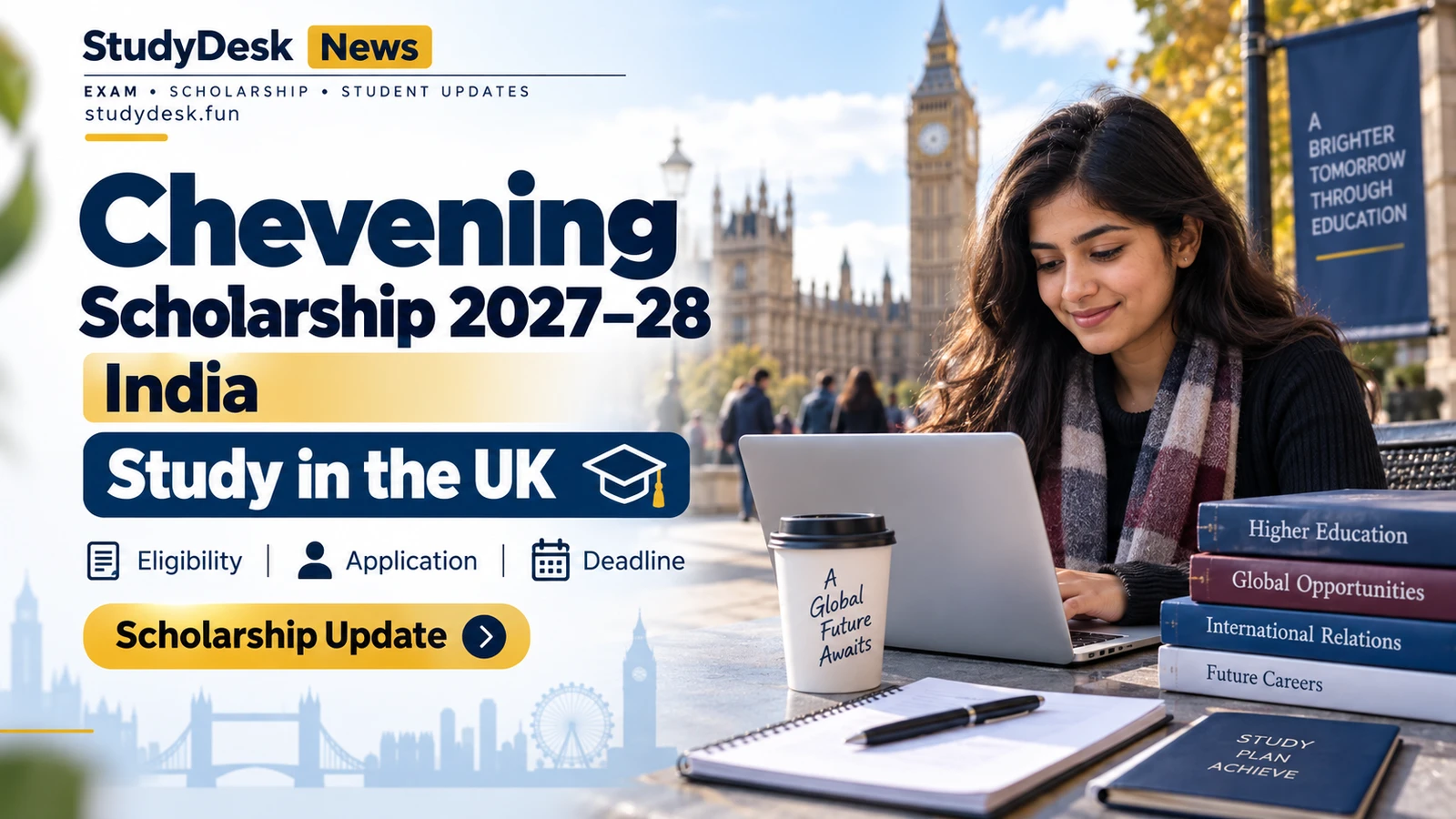
Applications for the Chevening Scholarship 2027-28 opened on 4 August 2026 and closed on 6 October 2026 at 11:00 UTC — 4:30 PM Indian time. The online application system is shut, and Chevening does not accept late submissions under any circumstances. If you applied, this page tells you what happens over the next nine months. If you missed it, it tells you exactly what to build before the next window so you are not writing essays in a panic again.
What Chevening is
Chevening is the UK government's global scholarship programme, funded by the Foreign, Commonwealth and Development Office (FCDO) and partner organisations, and running since 1983. It fully funds a one-year taught master's degree at a UK university for people the UK judges to be future leaders and decision-makers in their home countries. India is one of its largest programmes in the world, with several thousand alumni since 1983 across government, business, media, law and civil society. Selection is famously not a marks contest: assessors score leadership, networking and a credible post-study career plan, and the scholarships team is blunt that a vague career plan sinks otherwise strong applications.
What the award covers
For a successful scholar, Chevening pays the full tuition fee for the master's course (with a cap applied to MBA tuition), a monthly stipend intended to cover accommodation and living expenses, an economy return flight to the UK, and an arrival allowance; visa-related costs are also covered under the award terms. In return there is one hard condition: you must return to India for at least two years after your award ends. That is a contractual term of the scholarship, not a polite expectation.
Who was eligible for 2027-28
To apply, you needed to be an Indian citizen; hold an undergraduate degree that qualifies you for a UK postgraduate programme — broadly a UK upper second-class (2:1) honours equivalent; and have at least two years of work experience, calculated as 2,800 hours, accumulated after your degree across full-time, part-time, voluntary or paid work and internships that were not a mandatory part of your course. For this cycle, that arithmetic meant your degree needed to be finished by around October 2024. You also had to apply for three different eligible UK master's courses — full-time, taught, starting in autumn 2027, and based in the UK — and ultimately receive an unconditional offer from at least one of them. Part-time, distance-learning, undergraduate and PhD courses are not eligible, and research master's such as the MRes do not qualify either.
If you applied: the road from here to September 2027
Your timeline from Chevening's official cycle page is this. Independent reading committees are assessing all eligible applications from mid-October 2026 through January 2027. In mid-February 2027, the British High Commission will notify candidates shortlisted for interview. Interviews take place from March to April 2027 at the High Commission. If you are invited, you must upload your documents — photo ID, your undergraduate degree certificate and your reference letters — to the online application system at least seven working days before your interview date; missing that upload is an unforced way to lose a shortlist place. Results are announced from mid-June 2027. Successful candidates must then submit an unconditional offer from one of their chosen UK universities by 17:00 BST on 8 July 2027 — so keep your university applications moving in parallel; a Chevening win without an unconditional offer by that date cannot be taken up. Scholars begin their courses in September or October 2027.
If you missed it: prepare for 2028-29 properly
Chevening runs every year on the same rhythm, so the next window is expected to open in August 2027 for courses starting in autumn 2028 (not yet announced). Use the year well. First, count your hours honestly: if you are short of 2,800 hours of post-degree experience, the gap dictates your timeline. Second, shortlist your three UK courses early and read their entry requirements against your degree classification. Third, gather the raw material of the essays — Chevening asks about leadership, networking, your course choices and your career plan — from real work: outcomes you delivered, people you influenced, a plan that names the sector and role you are returning to in India. Fourth, line up two referees who actually know your work. The applicants who fail at the reading-committee stage usually fail on vagueness, not credentials.
Common mistakes
Applying with job titles instead of results; copying course descriptions from university websites into the course-choice answers; choosing three near-identical courses; treating the two-year return commitment as a formality; and — for this cycle's applicants still in the race — letting university applications drift after a good interview. The 8 July 2027 unconditional-offer deadline is as final as the application deadline was.
Sources & verification
Chevening’s official India page was checked on 9 October 2026 and states that applications for 2027–28 are now closed (the 6 October 2026, 11:00 UTC deadline has passed). Eligibility, benefits and the application process remain as published by Chevening.
Frequently asked questions
When did Chevening 2027-28 applications close?
Applications opened on 4 August 2026 and closed on 6 October 2026 at 11:00 UTC — 4:30 PM Indian time — and Chevening does not accept late submissions.
How much work experience did applicants need?
At least two years of work experience, calculated as 2,800 hours, accumulated after the undergraduate degree across full-time, part-time, voluntary or paid work and internships that were not a mandatory part of the course.
What does the Chevening award cover?
It pays the full tuition fee for the one-year taught master's course (with a cap applied to MBA tuition), a monthly stipend for accommodation and living expenses, an economy return flight to the UK, and an arrival allowance, with visa-related costs also covered under the award terms.
When are interviews and results for the 2027-28 cycle?
Shortlists are notified in mid-February 2027, interviews take place from March to April 2027, and results are announced from mid-June 2027.
By when must successful candidates submit an unconditional offer?
By 17:00 BST on 8 July 2027, from one of the chosen UK universities, with studies beginning in September or October 2027.
Do Chevening scholars have to return to India?
Yes. Scholars must return to India for at least two years after the award ends; that is a contractual term of the scholarship.

Rhodes Scholarship India 2027 current scholarship status, eligibility, benefits, application process, deadline and official-source verification.
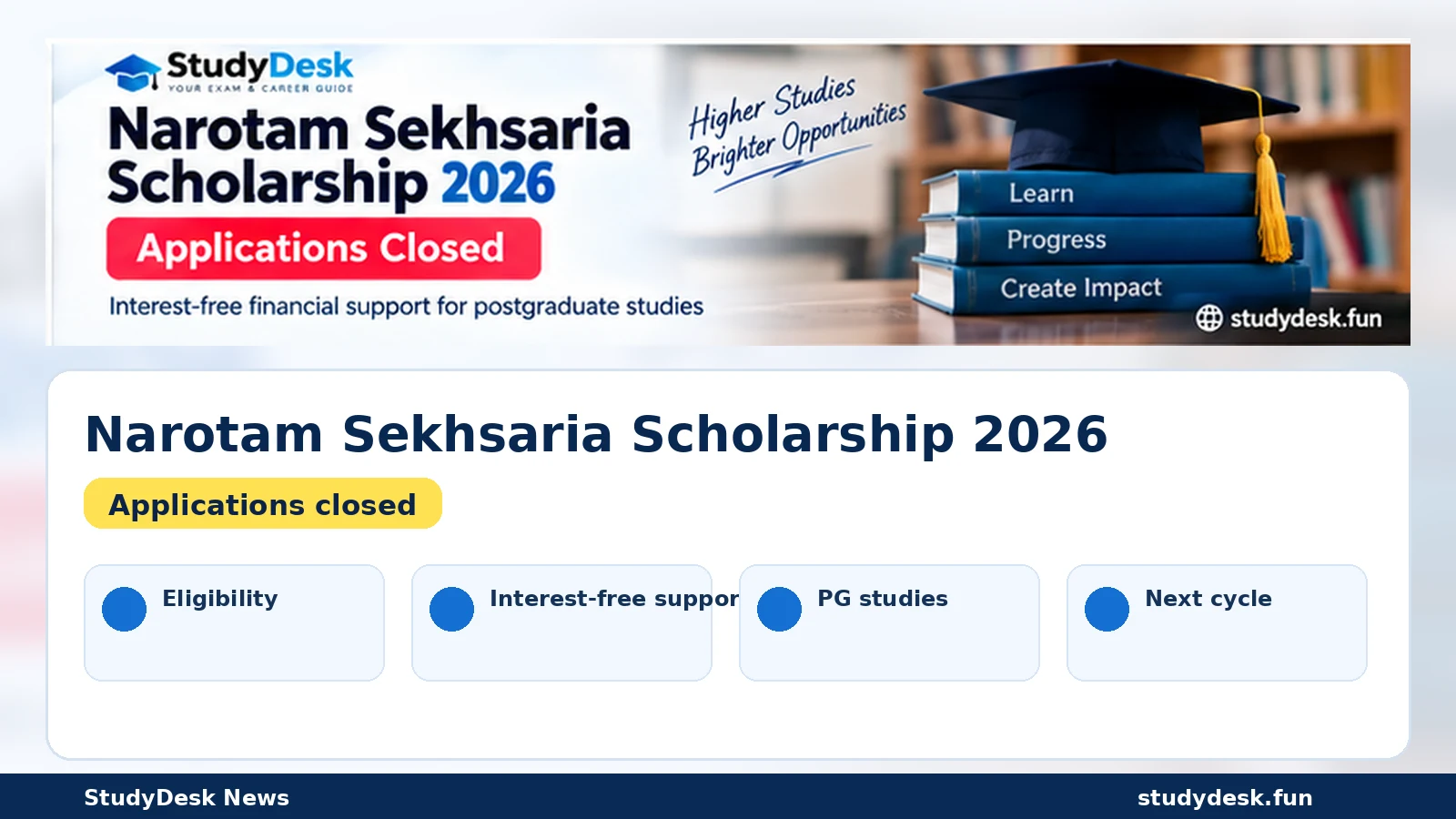
The Narotam Sekhsaria Foundation says the 2026 application process is closed; its published deadline was 23 March 2026. This page explains the interest-free support model, eligibility and what to watch for in the next annual call.
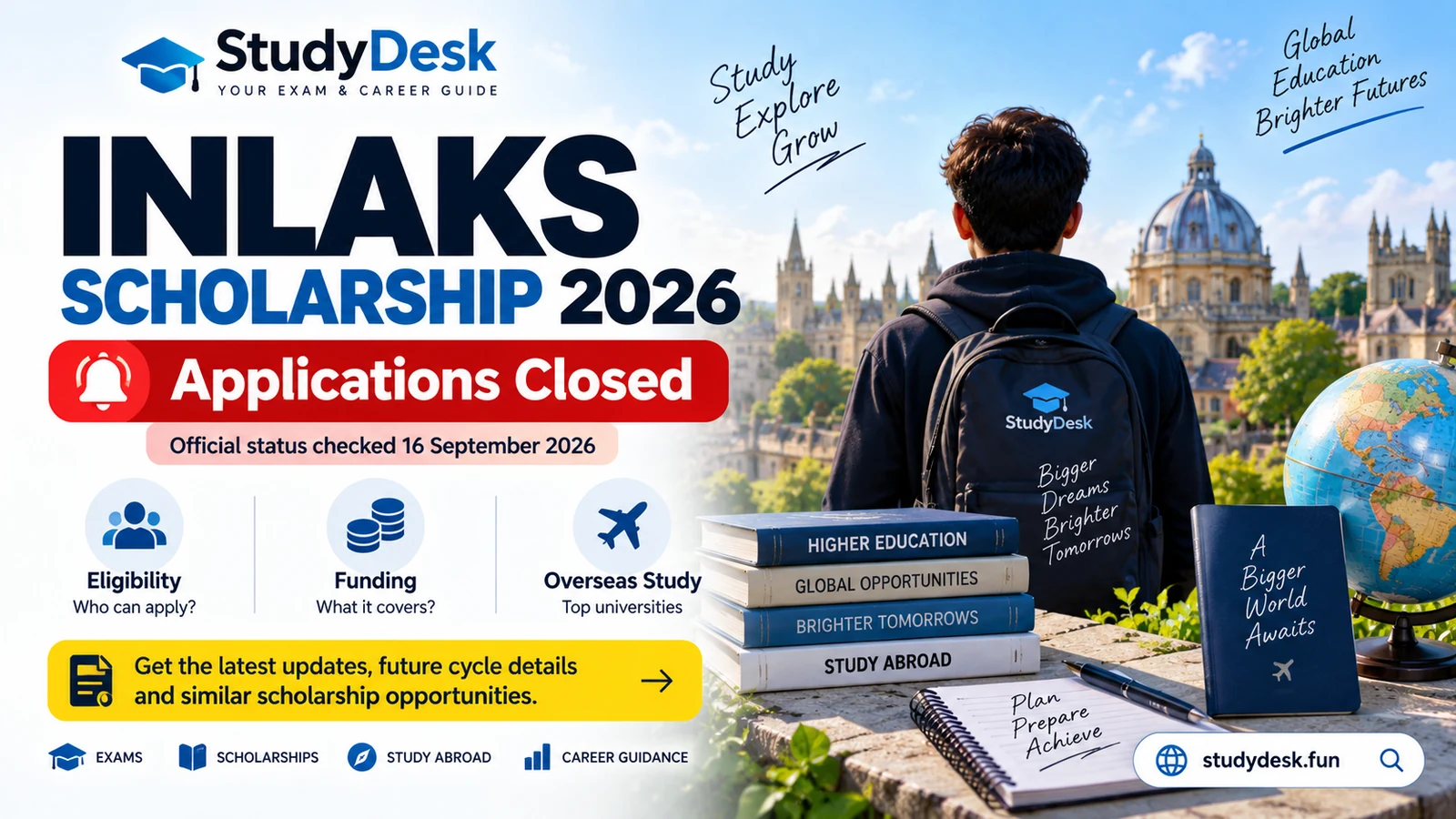
The Inlaks Foundation states that applications for 2026 are closed and shortlisted candidates have been informed. This guide explains the current closed status, eligibility and funding structure while you monitor the official page for the next cycle.
K. C. Mahindra PG Scholarship current scholarship status, eligibility, benefits, application process, deadline and official-source verification.
Fulbright-Nehru 2027–28 current scholarship status, eligibility, benefits, application process, deadline and official-source verification.