 StudyDesk
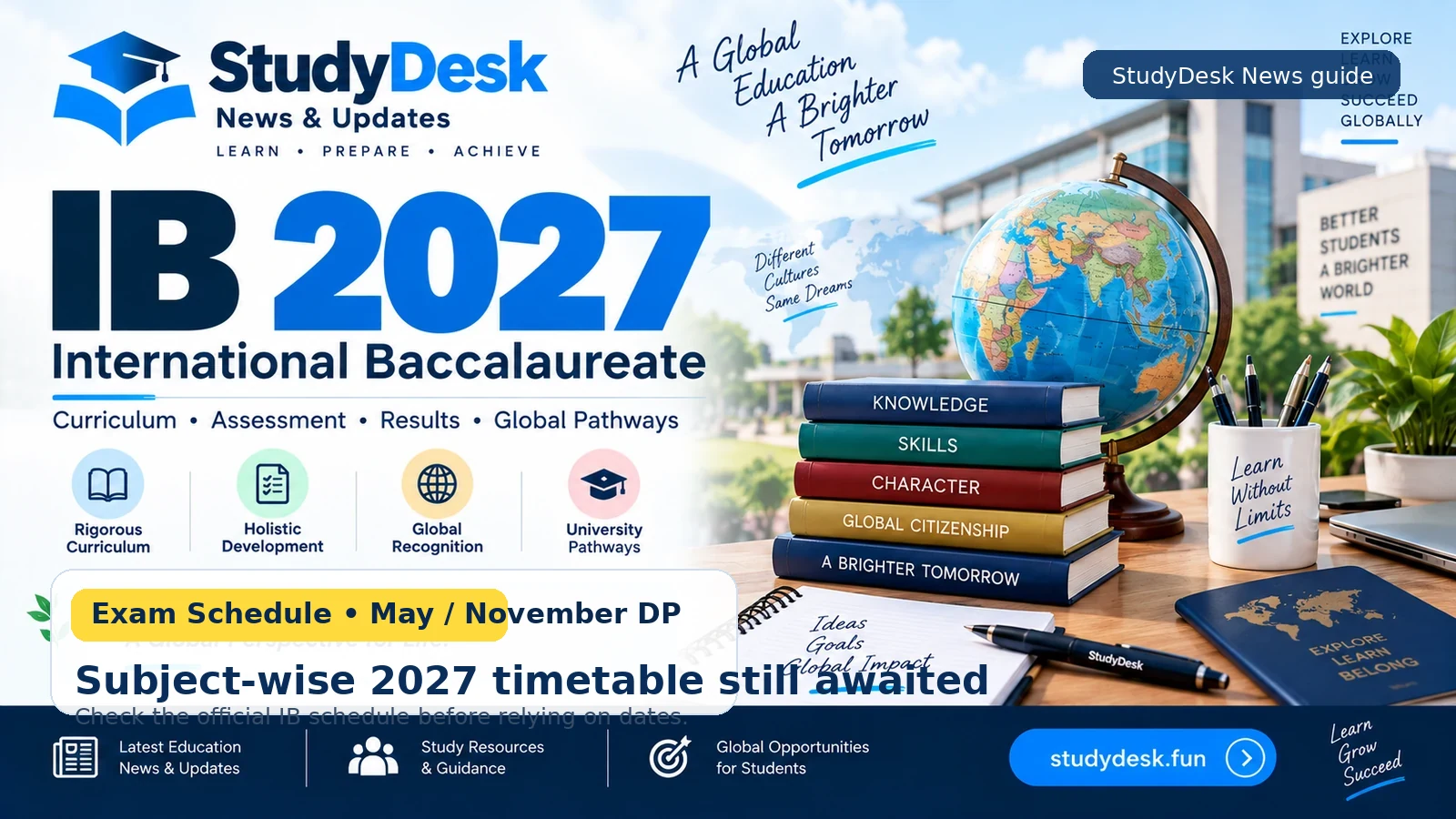
The honest status of the IB 2027 timetable
The International Baccalaureate has not published a subject-by-subject exam timetable for 2027 yet. The official IB exam schedule page — the page that carries the Diploma Programme (DP) and Career-related Programme (CP) schedules — was last updated on 19 February 2026 and presents the upcoming sessions, which at this point means the November 2026 session. There is no May 2027 PDF and no November 2027 PDF on it.
That is not a delay or a problem. It is how the IB works: the schedule for a session is published well in advance of that session, but not years in advance, and schools receive and distribute the relevant schedule to their candidates. If a website is showing you a day-by-day "IB May 2027 timetable" right now, it has either copied the 2026 schedule and changed the year, or invented one. Both are worse than useless, because IB exam planning is subject-specific — your six subjects, your levels, and your school's exam zone determine your actual calendar.
How IB sessions actually work
The IB runs two examination sessions a year: May and November. Most schools in India and the northern hemisphere sit the May session; the November session serves southern-hemisphere schools and students retaking subjects. You do not choose freely between them — your school is registered for a session, and that is your session.
The last two confirmed sessions show the real window sizes:
- May 2026: examinations ran from 24 April to 20 May 2026. Results were released to candidates on 6 July 2026.
- November 2026: examinations run from 23 October to 13 November 2026.
So a "May session" actually starts in late April, and it runs for roughly four weeks. Expect May 2027 to occupy a similar late-April-to-mid/late-May window and November 2027 a similar late-October-to-mid-November window — but treat those as planning shapes, not dates. Your coordinator will give you the confirmed dates for your subjects.
Within a session, exams are organised by zone (A, B and C, based on region/time zone). The subject dates are the same globally; the morning/afternoon start times differ by zone. This is why a timetable screenshot from a student in another country can show the right date and the wrong time for you.
What you are actually being examined on
The Diploma Programme is a two-year course for students aged roughly 16–19. Each candidate studies six subjects — one from each of six groups (studies in language and literature; language acquisition; individuals and societies; sciences; mathematics; and the arts, which can be replaced by a second subject from another group) — normally three at Higher Level and three at Standard Level.
Around those six subjects sits the core, which is not optional and which catches out more students than any exam paper:
- Theory of Knowledge (TOK) — an essay and an exhibition, assessed across the two years.
- The Extended Essay — a 4,000-word independent research essay in one subject.
- Creativity, Activity, Service (CAS) — a sustained programme of experiences with reflections, completed over 18 months.
Each subject is graded 1–7, giving a maximum of 42 subject points, with up to 3 additional points from TOK and the Extended Essay combined — a maximum total of 45 points. The diploma is awarded at 24 points or more, provided core requirements are met and no failing conditions apply (a grade 1 in any subject, for example, is a failing condition regardless of total). Universities care about the total and about specific HL grades, which is why your subject-level timetable matters more than the session window.
Registration is through your school — there is no public form
Unlike Indian board or entrance exams, you cannot register for IB exams yourself. Your school's DP coordinator registers candidates, confirms subject entries and levels, collects IB fees (which the school sets/passes on, not a single global price you pay online), and issues your personal examination schedule. Internal assessment deadlines — for coursework, the TOK essay, the Extended Essay, language orals and arts portfolios — are set by your school within IB deadlines and fall months before the written exams. Missing an internal deadline is a school-level crisis, not something an IB helpdesk can fix.
Practically, this means your action list for 2027 is:
- Confirm with your coordinator which session (May or November 2027) your cohort is registered for, and that your six subjects and levels are entered correctly. An HL/SL error discovered in the exam hall cannot be corrected.
- Get your school's internal assessment calendar for the year and work backwards from it — the written exams are the last deadline you face, not the first.
- When the official session schedule is published, your coordinator will map it to your subjects. Build your revision plan from that personal schedule, noting back-to-back exam days, which are common in the middle weeks of the session.
- Keep your candidate details (legal name spelling, date of birth) consistent with your passport/ID — these appear on your IB transcript, and corrections after results are slow.
Results and transcripts
Results follow roughly six weeks after the session ends — May 2026 candidates received results on 6 July 2026 — and are released through schools and the IB candidate portal using a personal code your school provides. The IB can send transcripts directly to universities; candidates can request up to six university destinations free of charge before results are released, with paid requests possible afterwards.
The mistakes IB students make with timetables
- Planning revision from a generic internet timetable for the wrong session, wrong year or wrong zone.
- Assuming "May exams" start in May. The May 2026 session opened on 24 April. Students who planned to "start serious revision in April" were already late.
- Treating the core as paperwork. TOK, the Extended Essay and CAS carry points, deadlines and failing conditions. They are part of the diploma, not admin.
- Forgetting retake rules differ. If you are considering a November 2027 retake of a May 2027 subject, discuss it with your coordinator early — retake registration has its own deadlines and fees through the school.
For now, the correct 2027 plan is simple: confirm your session and entries with your coordinator, work to your school's internal deadlines, and wait for the IB to publish the real 2027 schedules on its exam schedule page. When they appear, this page should be updated with the confirmed session windows — and only then with subject dates.
Sources & verification
The official IB DP/CP exam-schedule page currently lists published schedules through November 2026. No May/November 2027 subject-by-subject schedule is shown there yet. May 2027 and November 2027 are used only as expected session windows based on the established session naming pattern, not as final timetables.
Frequently asked questions
Has the IB published a 2027 exam timetable?
No. The official IB exam schedule page was last updated on 19 February 2026 and carried no May 2027 or November 2027 subject-by-subject PDF at this check.
When do IB sessions run?
The IB runs May and November sessions each year. May 2026 examinations ran from 24 April to 20 May 2026 and November 2026 examinations run from 23 October to 13 November 2026; the 2027 windows in this article are described as that established pattern only, not as published dates.
How do I register for IB exams?
You cannot register yourself — your school's DP coordinator registers candidates, confirms subject entries and levels, collects the IB fees the school passes on, and issues your personal examination schedule.
How many points do I need to pass the IB diploma?
The diploma is awarded at 24 points or more, provided core requirements are met and no failing conditions apply. Each subject is graded 1–7, giving a maximum of 42 subject points, with up to 3 additional points from TOK and the Extended Essay combined — a maximum total of 45 points.
When do IB results come out?
Results follow roughly six weeks after the session ends — May 2026 candidates received results on 6 July 2026 — and are released through schools and the IB candidate portal using a personal code your school provides.

Coast Guard Enrolled Persons Test (CGEPT) batches 01/2027 and 02/2027: 365 vacancies, applications 6-21 October 2026, eligibility and selection process.
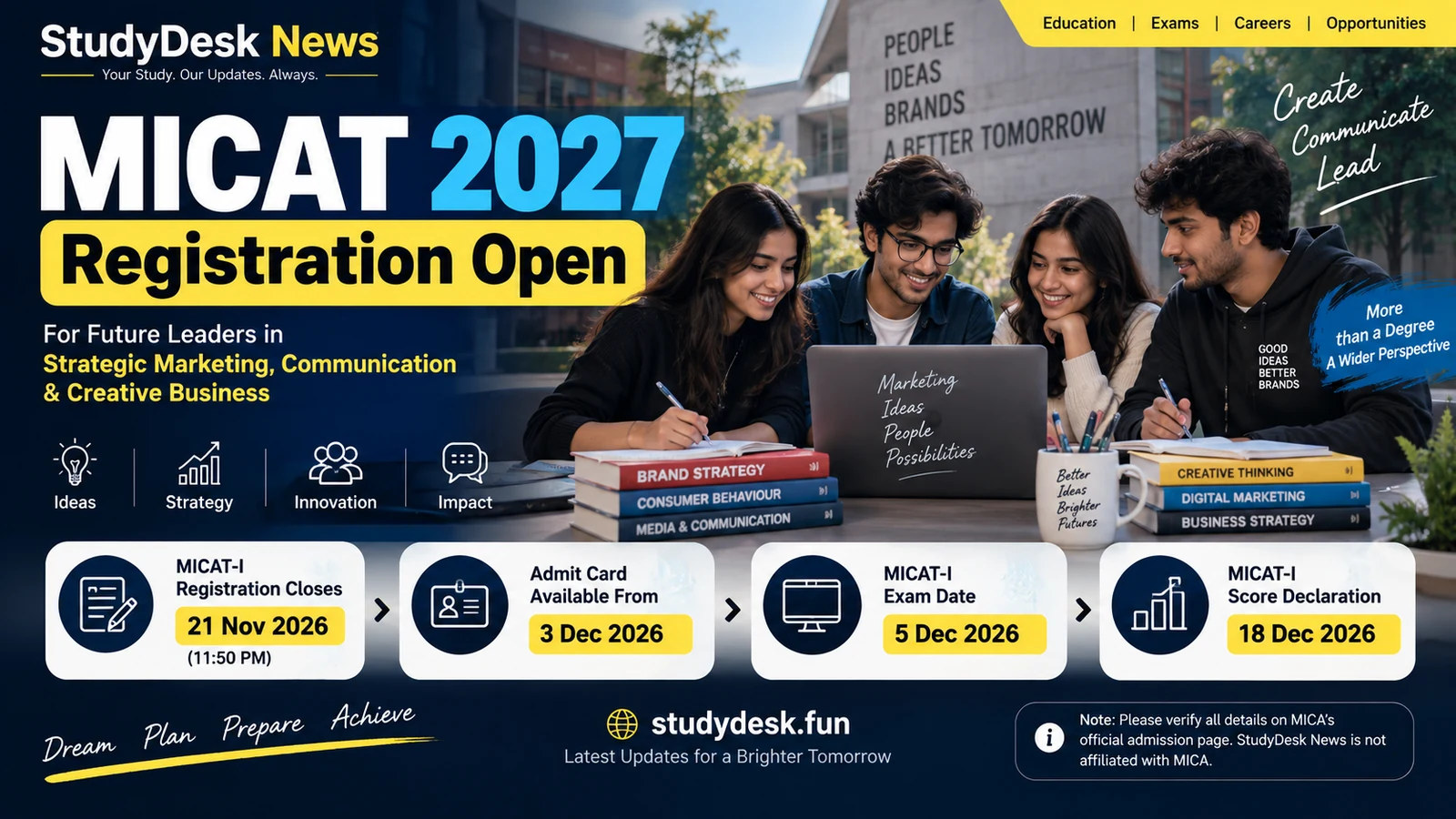
MICAT 2027 registration dates, MICAT-I exam schedule, official MICA admissions source and next steps.
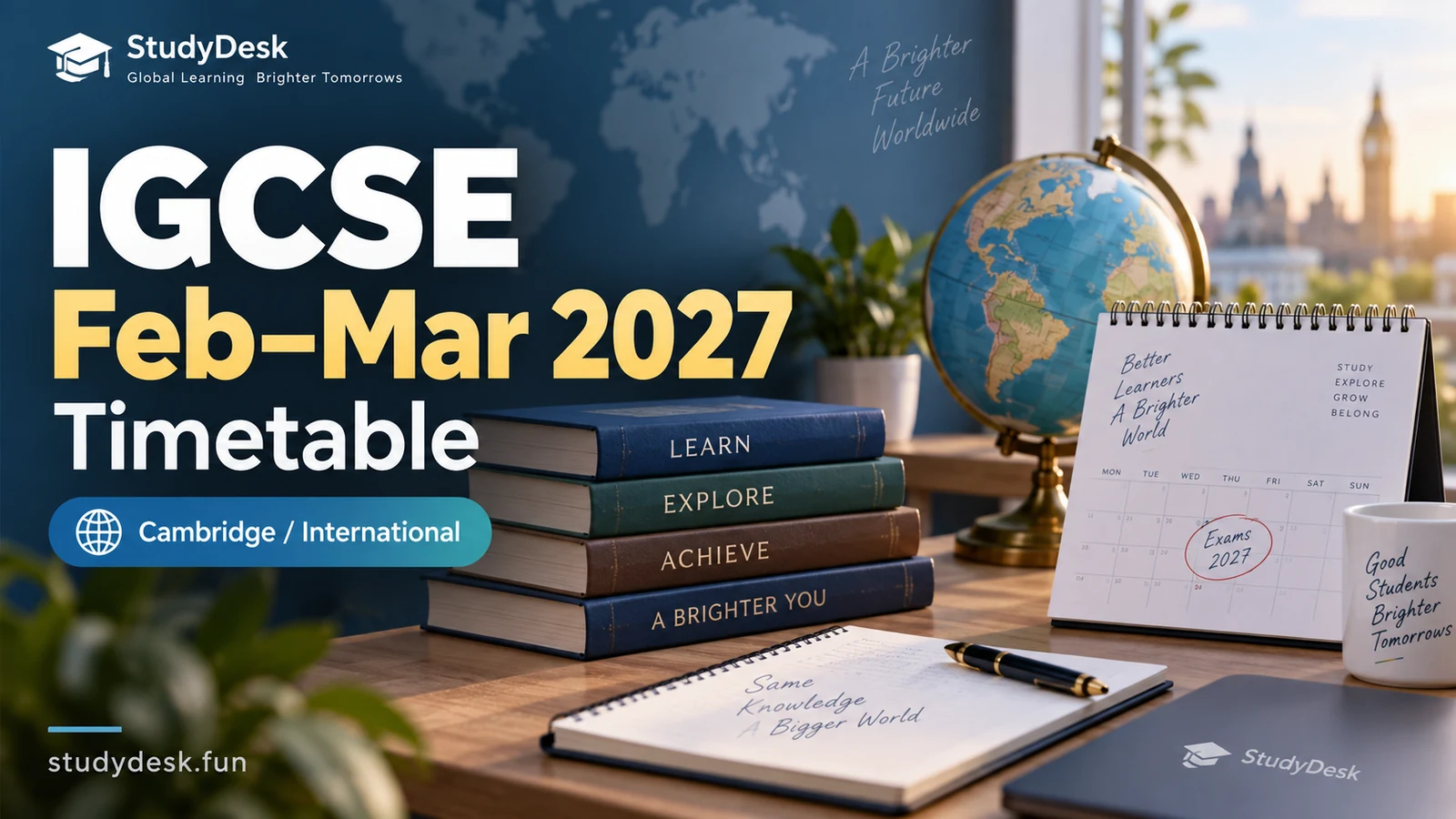
A current, source-led IGCSE 2027 guide separating Cambridge IGCSE from Pearson Edexcel International GCSE and explaining timetables, subjects, grading, assessment, private-candidate routes, results and progression.

NEST 2027 registration date, exam date, eligibility, fee, syllabus and NISER / CEBS admission status. Check the official update, previous-cycle timeline and what students should track next.
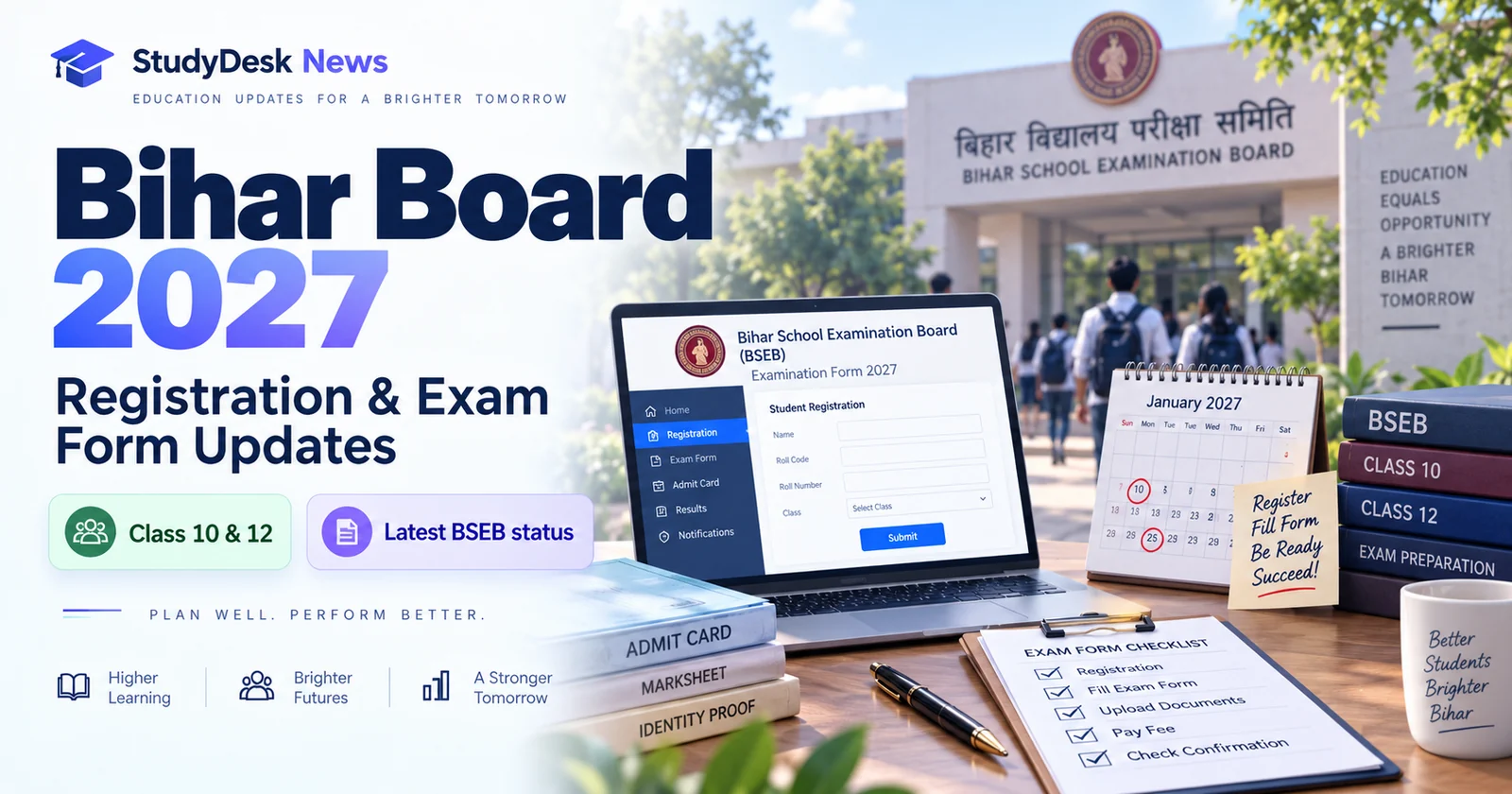
Bihar Board 2027 hub — Intermediate exam-form third window 1–15 Oct 2026 (fee till 14 Oct); final 2027 timetable awaited.