 StudyDesk
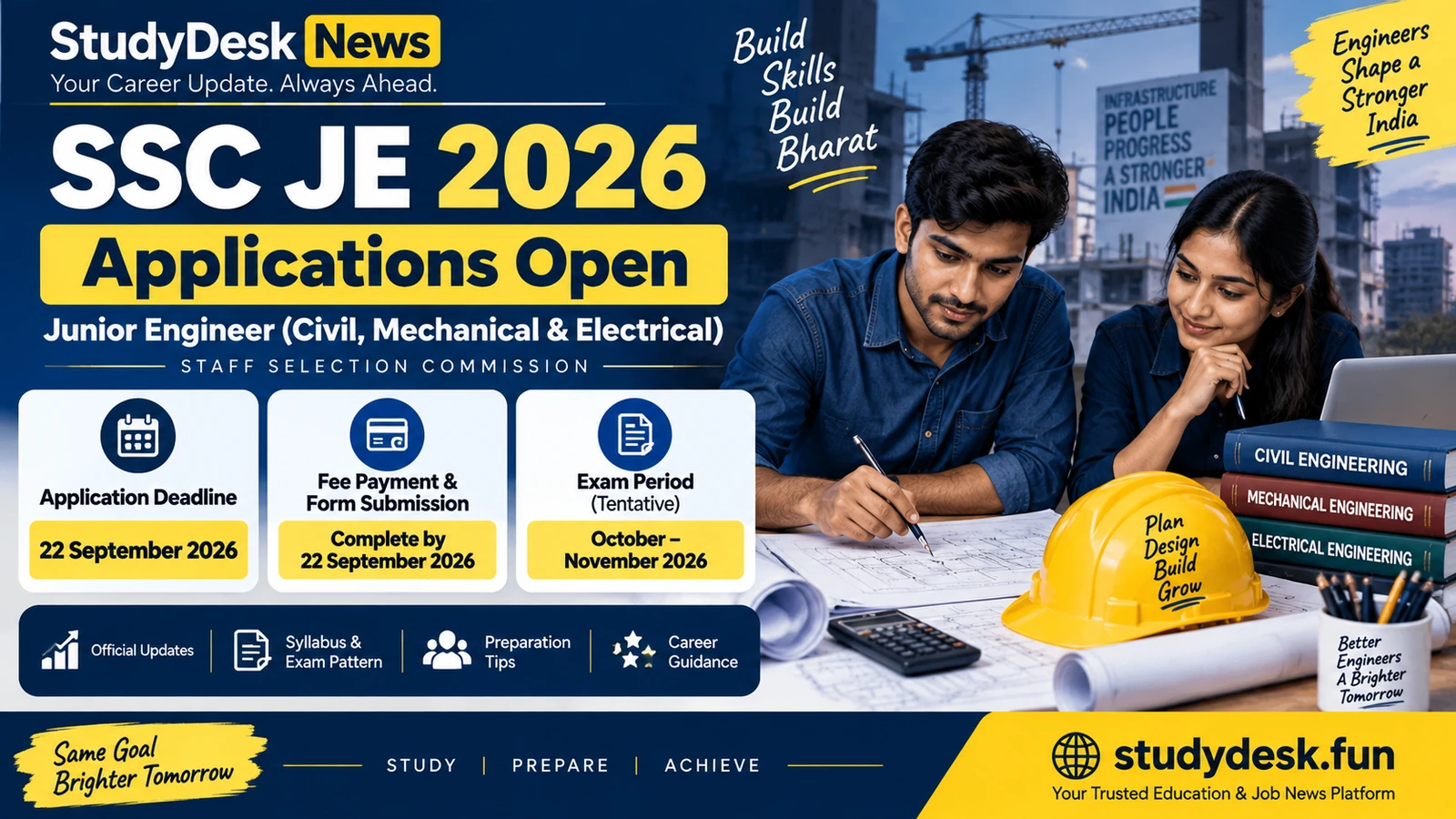
Where SSC JE 2026 stands right now
The Staff Selection Commission has closed applications for the Junior Engineer (Civil, Mechanical and Electrical) Examination 2026 (Notice F. No. HQ-C-3019/1/2026-C-3). The notification was released on 2 September 2026, applications ran from 2 to 22 September 2026 (closing at 11:00 PM on the last day; online fee payment was accepted until 11:00 PM on 23 September), and a correction window ran 28–30 September 2026. Paper-I is now fixed: SSC's schedule notice of 1 October 2026 — listed on the official ssc.gov.in homepage — puts the computer-based Paper-I on 2–6 November 2026, with Paper-II tentatively in December 2026. If you applied, your next milestone is the exam-city intimation and admission certificate (admit card) on ssc.gov.in and your regional SSC website; SSC's helpline for this cycle is 1800-309-3063. If you did not apply, the window is shut — SSC does not reopen JE applications mid-cycle, and anyone selling you a "late application" route is selling a scam.
This cycle carries 1,748 tentative vacancies across central government organisations — and note the expansion: alongside the traditional JE posts in the Border Roads Organisation, CPWD, Military Engineer Services, Central Water Commission, Farakka Barrage Project and NTRO, the 2026 notice also brought in Junior Engineer (Telecom) in the Department of Telecommunications and Scientific Assistant posts in the India Meteorological Department. That widened the eligible pool well beyond the classic three branches.
What the job is
A Junior Engineer is a Group 'B' non-gazetted technical post in Pay Level 6 of the 7th CPC pay matrix — ₹35,400 to ₹1,12,400 — plus DA, HRA and transport allowance by posting city. JEs supervise and execute engineering works: CPWD engineers maintain central government buildings and infrastructure, MES engineers serve defence establishments, CWC engineers work on water-resources projects, and BRO engineers build roads and bridges in border and high-altitude areas. It is a field-and-site job with a desk component, and for diploma holders it remains one of the most direct routes into central government engineering service.
Who was eligible
Eligibility is post-wise, and the notification's annexure is the authority — but the framework was:
- Qualification: a degree in Civil, Mechanical or Electrical Engineering from a recognised university/institute, or a three-year diploma in the relevant discipline. Some posts require experience alongside a diploma (for example, JE posts in the Directorate General of Lighthouses and Lightships: degree, or diploma with three years' experience). JE (Telecom) required a B.E./B.Tech in Electrical, Electronics, Computer Science, Telecommunication, IT or Instrumentation; Scientific Assistant (IMD) required a B.Sc. with Physics or a bachelor's degree in CS/IT/Electronics/Telecommunication.
- Age limit (as on 1 August 2026): up to 30 years for most posts and up to 32 years for some (including CPWD posts). Standard relaxations applied: 5 years for SC/ST, 3 years for OBC, 10 years for PwBD (up to 15 for SC/ST PwBD).
- Nationality: Indian citizen (with the standard provisions the SSC notice sets out).
The most common disqualifier every cycle is a discipline mismatch — applying for a post whose prescribed branch does not match your degree or diploma. SSC checks this at document verification, not at application, so a wrong choice can survive the entire exam and still end your candidature at the last stage.
Fees, and how applications worked this cycle
The application fee was ₹100, with complete exemption for women, SC, ST, PwBD and ex-servicemen candidates. Applications were online only, through the new SSC portal: candidates first completed One-Time Registration (OTR) on ssc.gov.in (or via the mySSC app), with Aadhaar-based authentication recommended for smoother validation, then filled the JE application form, captured a live photograph through the portal's module, and uploaded a JPEG signature (10–20 KB, 6.0 cm × 2.0 cm). Candidates who applied should have saved the submitted form and payment status — the application number is needed for admit-card downloads.
Exam pattern and selection: read this before you prepare
Selection is Paper-I → Paper-II → Document Verification, with both papers now computer-based.
Paper-I (qualifying in nature): 200 questions, 200 marks, 2 hours — General Intelligence & Reasoning (50 questions/50 marks), General Awareness (50/50), and General Engineering in your chosen discipline (100/100). Negative marking: 0.25 marks per wrong answer. You must clear the minimum qualifying marks — 30% for UR, 25% for OBC/EWS, 20% for all other categories — and score high enough to be shortlisted for Paper-II. Paper-I does not decide your final merit.
Paper-II (decides merit): 100 questions, 300 marks, 2 hours, entirely on your engineering discipline, with 1 mark deducted per wrong answer. Final merit is prepared strictly on normalised Paper-II marks. An on-screen virtual scientific calculator is available, and for Civil candidates IS 456 and steam tables are provided in the console where applicable.
The strategic implication is one many candidates miss: Paper-I is a gate, Paper-II is the race. Splitting your preparation evenly between the two papers misallocates your time — clear Paper-I comfortably, but build your preparation around Paper-II depth.
What applicants should do now
- Watch for the admission certificate.SSC releases Paper-I admit cards region-wise shortly before the exam, on ssc.gov.in and regional SSC sites. Download yours as soon as it appears and verify name, photograph, exam city and date.
- Check application statuson the candidate portal if anything about your form worries you — a rejected application discovered on admit-card day is unfixable.
- Keep documents ready for verification:degree/diploma and marksheets, category certificate, age proof, photo ID. BRO applicants should also expect physical standard/efficiency requirements at their stage.
- Prepare to the pattern above— previous-year JE papers remain the best calibration for Paper-II's depth and style.
Common mistakes
- Missing the correction window's limits: the 28–30 September window fixed errors in submitted forms; it was never a second application chance.
- Discipline/post mismatch discovered only at document verification.
- Photo and signature non-compliance — the live-photo module and exact signature dimensions exist to be followed, not approximated.
- Preparing Paper-I and Paper-II as equals. Merit comes from Paper-II alone.
- Trusting unofficial "exam date confirmed" posts over SSC's own schedule. Paper-I is confirmed for 2–6 November 2026 by SSC's 1 October 2026 schedule notice; what is not yet confirmed is your individual exam day, city and shift — those come only with the city intimation and admission certificate on ssc.gov.in.
Sources & verification
Checked ssc.gov.in today: the JE 2026 application window (2–22 Sep 2026) is closed with no extension notice found. SSC's latest JE notice (8 Oct 2026) publishes tentative vacancies; the exam period remains October–November 2026 per the revised SSC schedule. Confirm admit-card dates on the SSC candidate portal.
Frequently asked questions
Can I still apply for SSC JE 2026?
No. Applications ran from 2 to 22 September 2026 (closing at 11:00 PM), online fee payment was accepted until 11:00 PM on 23 September, and the correction window ran 28–30 September 2026. SSC does not reopen JE applications mid-cycle.
When is SSC JE 2026 Paper-I?
SSC's schedule notice of 1 October 2026 puts the computer-based Paper-I on 2–6 November 2026, with Paper-II tentatively in December 2026. Your individual exam day, city and shift come only with the city intimation and admission certificate on ssc.gov.in.
How many vacancies are there in SSC JE 2026?
This cycle carries 1,748 tentative vacancies across central government organisations, and SSC's own notice wording makes that total tentative — the final department-wise breakup can change.
Who was eligible for SSC JE 2026?
A degree in Civil, Mechanical or Electrical Engineering from a recognised university or institute, or a three-year diploma in the relevant discipline, with some posts requiring experience alongside a diploma. The age limit as on 1 August 2026 was up to 30 years for most posts and up to 32 years for some, including CPWD posts.
Does SSC JE Paper-I decide the final merit?
No. Paper-I is a gate — 200 questions, 200 marks, with 0.25 marks deducted per wrong answer — and final merit is prepared strictly on normalised Paper-II marks. Paper-II has 100 questions for 300 marks, entirely on your engineering discipline, with 1 mark deducted per wrong answer.
What was the SSC JE 2026 application fee?
₹100, with complete exemption for women, SC, ST, PwBD and ex-servicemen candidates. Applications were online only through the new SSC portal after One-Time Registration on ssc.gov.in.
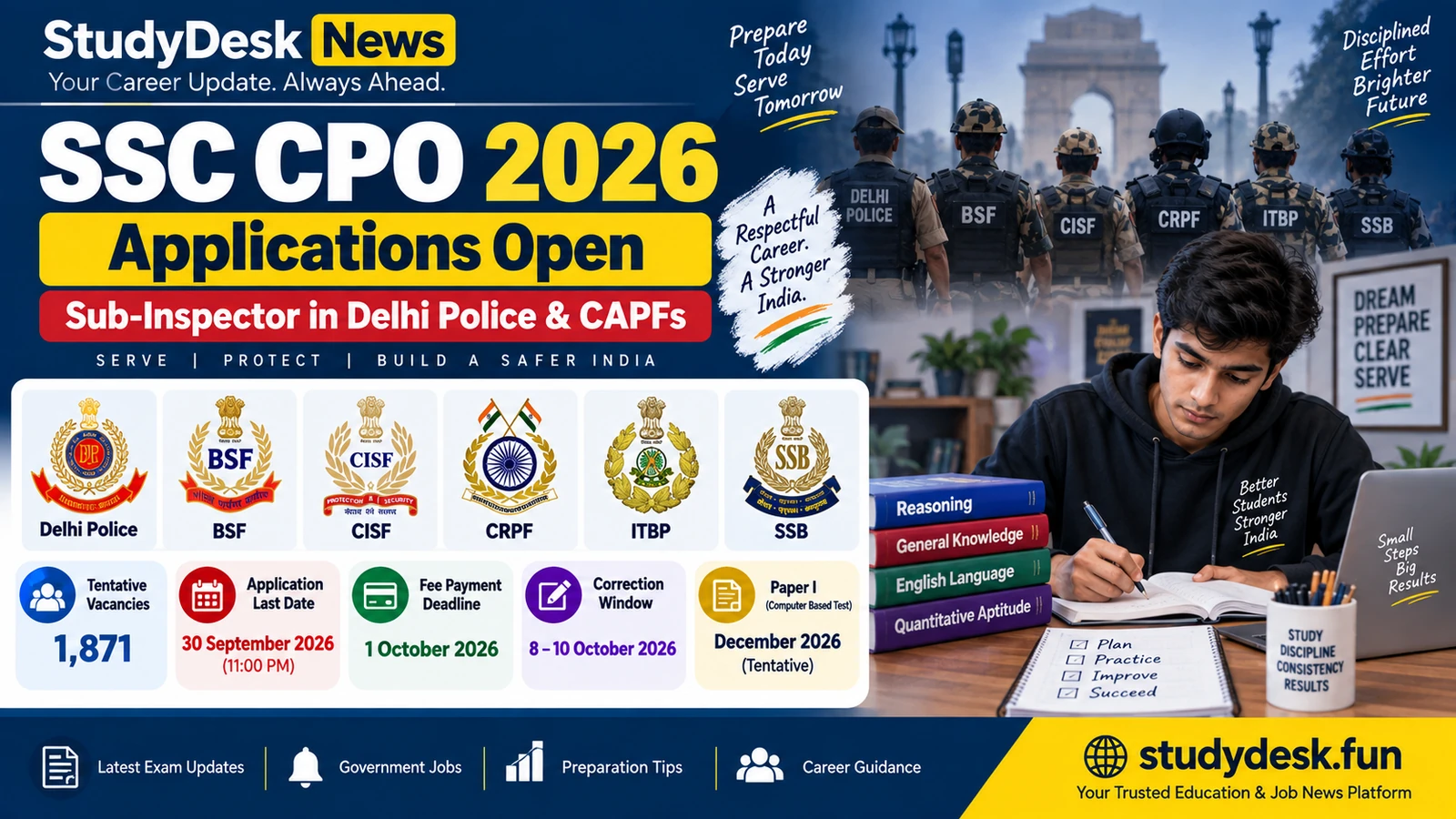
SSC CPO 2026 application closure, correction window and Paper-I schedule update.
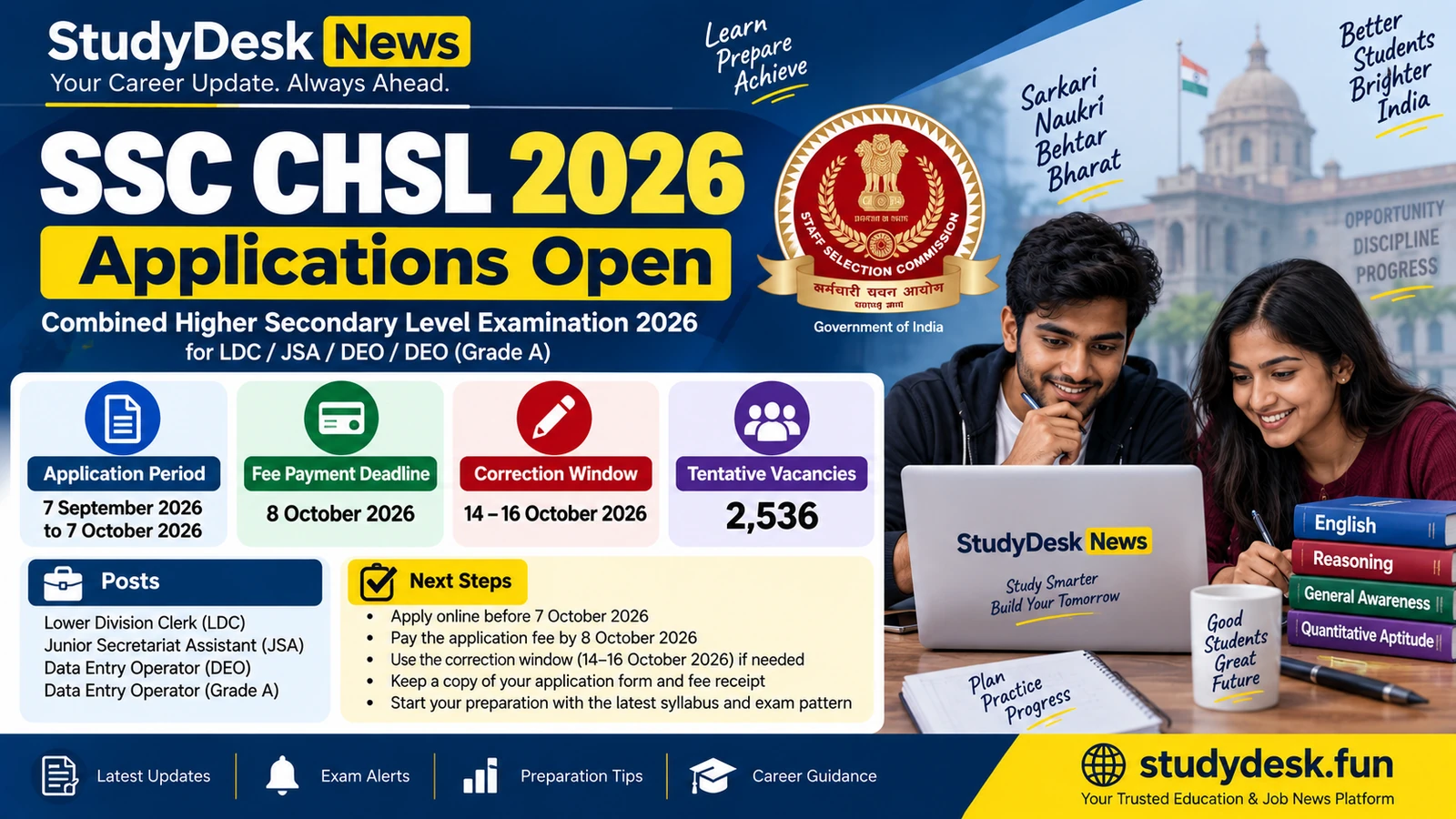
SSC CHSL 2026 application closure, correction window, tentative vacancies and Tier-I exam schedule update.
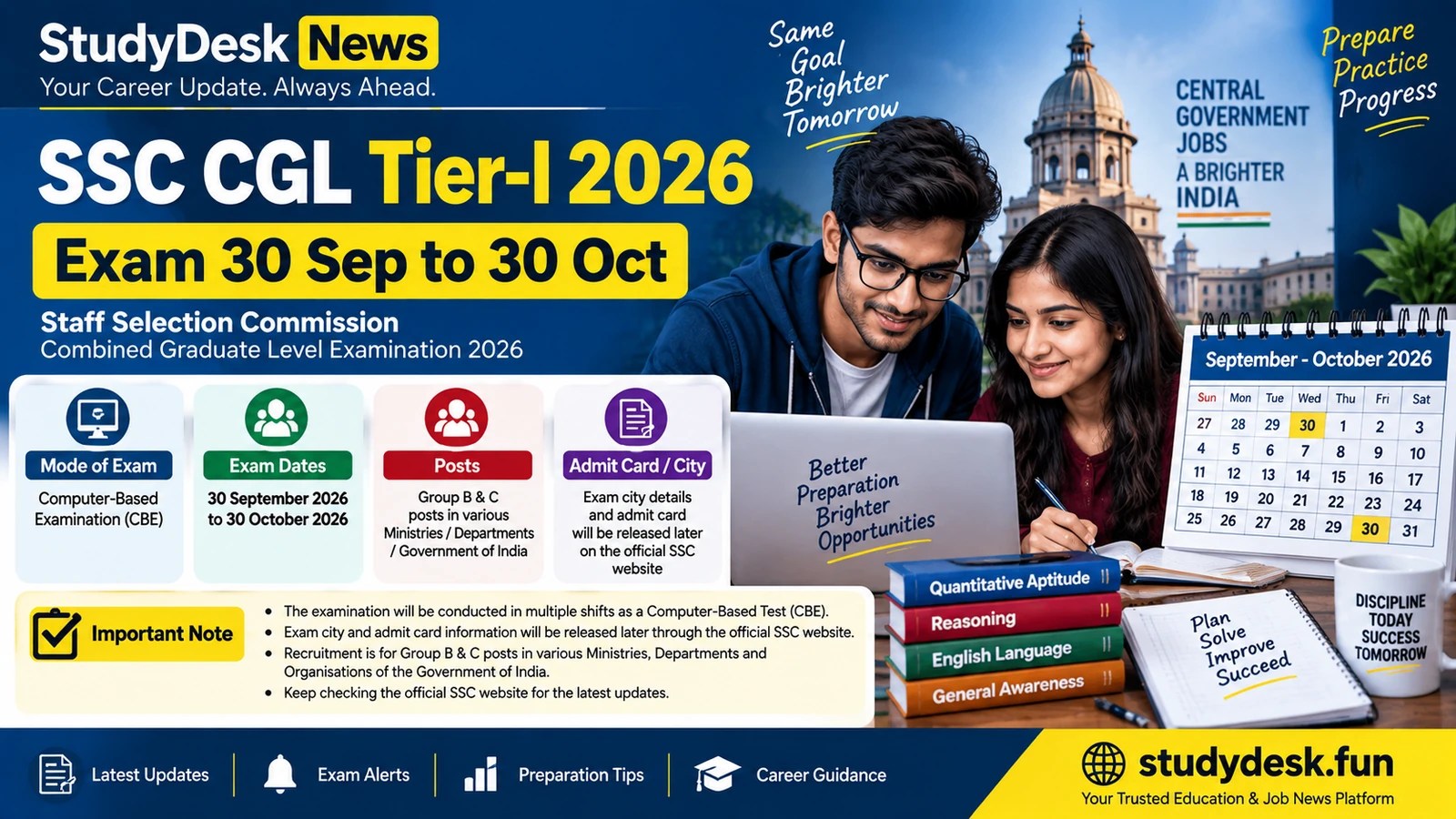
Current SSC CGL 2026 Tier-I exam-window, admit-card and city-information tracker.
SSC MTS and Havaldar (CBIC & CBN) Examination 2025: additional computer-based exam result declared 7 October 2026 for Havaldar PET/PST shortlisting.
SSC CHSL 2025 final result declared 7 October 2026: how to check the official PDF, what final selection means, and next steps for selected candidates.